Limón Raises Its Voice: The Challenge of Integrating Afro-descendant Representation in the New Cabinet
Historical and contemporary references show that Limón’s talent exists and is fully prepared.
Law No. 10120 makes Afro-descendant representation a State obligation.
The formation of the new government in Costa Rica, scheduled for May 8 under President-elect Laura Fernández, has reignited a debate that goes beyond politics: the real representation of the Afro-descendant population within structures of power.
An analysis published by journalist Esteban Arrieta in La República highlights a compelling reality: Limón does not lack talent, but rather opportunities.
Limón: A History of Leadership, Not Absence
The narrative of exclusion contrasts with the historical trajectory of Afro-descendant leadership in Costa Rica. Figures such as Alex Curling, the country’s first Afro-descendant congressman; Thelma Curling, the first Afro-descendant woman to serve in Congress; and Marcell Taylor, educator and former legislator, marked milestones that paved the way within national institutions.
More recently, Eduardo Cruickshank became the first Afro-descendant to preside over the Legislative Assembly, reaffirming that representation is not merely an aspiration, but a proven capacity.
In the cultural sphere, names such as Eulalia Bernard, Walter Ferguson, and Quince Duncan not only built identity, but also positioned the Afro-descendant voice as an essential part of the national narrative.
Law 10120: From Symbol to Real Enforcement
Law No. 10120 establishes that at least 7% of public sector vacancies must be filled by Afro-descendant individuals. However, its effective implementation remains an outstanding challenge, particularly at the highest levels of power.
The new cabinet represents a concrete opportunity for this regulation to move beyond symbolic intent and translate into real political decisions.
Ramiro Crawford: A Leadership Profile with an International Vision
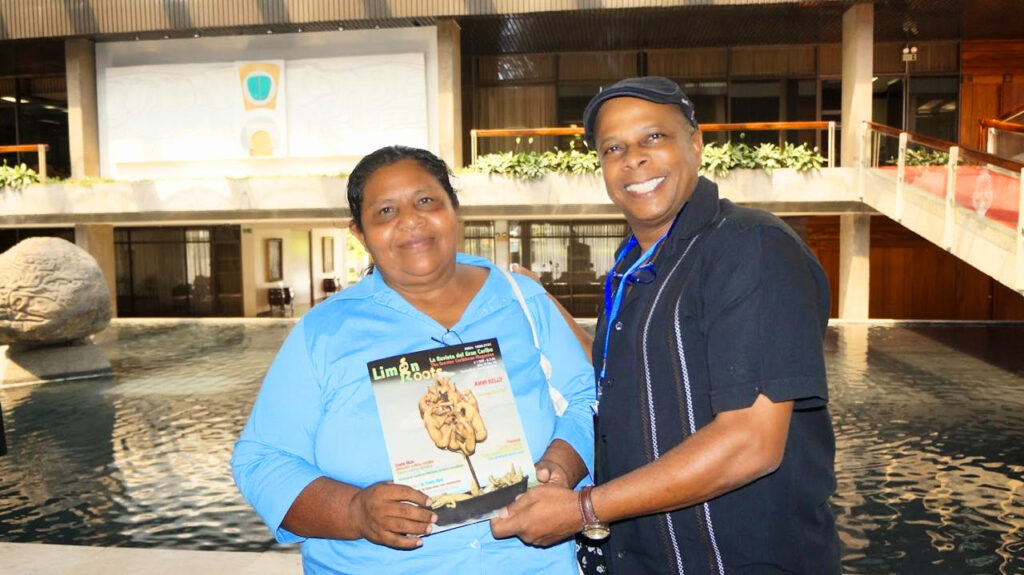
Among the profiles highlighted in the analysis is engineer Ramiro Crawford Sterling, a leader from Limón with more than 40 years of experience in public management, international cooperation, and cultural diplomacy.
His role as founder of the Afrocultural Festival Limón Roots, with more than two decades of impact, positions him as a key figure in promoting Costa Rican Afro-Caribbean identity.
Additionally, his work in international networks, participation in anti-racism initiatives, and ability to engage with the Greater Caribbean make him a strategic profile for foreign service.
Support for his trajectory is significant. Fred Blaser, co-president of La República, describes him as a thinker with deep national and international knowledge.
Jorge Sauma, former manager of Corbana, highlights his leadership at the University of Costa Rica and his impact on foreign relations.
Rubén Mora, rector of the University of the Arts Sciences, underscores his potential to strengthen ties with the Caribbean, while Max Alvarado, former president of the National Bank of Costa Rica, emphasizes his ability to organize high-level international events such as the Partners of the Americas Convention and the Limón Roots Awards.
More Than Representation: A Strategic Decision
Afro-descendant inclusion in the cabinet is not only an act of historical justice—it is a strategic decision for the country.
Limón represents not only cultural diversity, but also knowledge, experience, and a direct connection to the Caribbean that Costa Rica can no longer afford to overlook.
Perspective
The new government faces a clear decision: maintain symbolic representation or take the step toward real inclusion.
Limón has already demonstrated that it has leaders.
Now, the country must decide whether it is willing to listen.